The snack aisle looks different than it did ten years ago. Craft jerky, artisan crackers, small-batch nut mixes, and a growing list of better-quality salty snacks have changed what gets sold under “snack.” Chicharrones have quietly joined that shift.
For a long time, chicharrones sat on the shelf in one form. A standard bagged version next to the potato chips, heavily salted, often seasoned with artificial flavors. A wave of smaller producers has opened a second lane. Better pork, cleaner ingredients, and traditional preparation methods, showing up on charcuterie boards, at specialty grocery stores, and in keto-focused food shops.
Most conventional supermarkets still stock only one or two basic options. Specialty online retailers carry the broader craft side of the category. The premium chicharrones collection is one example, with pork sourced from smaller farms and preparation methods closer to traditional Latin American styles than the standard industrial product.
Why They Feel New Again
Part of what makes the category feel new isn’t the product. Chicharrones have existed for centuries. What’s new is where they’re showing up.
On charcuterie boards at dinner parties. In the snack sections of specialty food stores. At modern entertaining setups that would have served potato chips a decade ago. At keto-forward cafés and craft food markets that have started treating pork rinds the way they treat cured meats and aged cheese.
Most people don’t discover premium chicharrones through the standard snack aisle anymore. A sample at a specialty retailer. A bag at a friend’s house alongside the olives and the manchego. A recommendation through a keto or paleo food account. A restaurant charcuterie plate that’s quietly added them next to the prosciutto. The product itself isn’t new. The context absolutely is, and the context is what’s pulling the category into the craft-food movement.
The Short Version
Premium chicharrones are fried or baked pork skin, sometimes made with pork belly included, with macros that sit cleanly on the low-carb end of the snack aisle: around 17 grams of protein per ounce and close to zero carbs. They’re naturally gluten-free in their simplest form and fit keto and paleo eating patterns without much fuss.
The flavor range spans sea salt, chile lime, barbecue, adobo, and spicy vinegar styles, drawing on Mexican, Puerto Rican, Colombian, and Filipino traditions. Quality signals worth paying attention to are a short ingredient list, clear sourcing information, and no artificial flavors. Price-wise, premium bags usually sit in the $5 to $10 range compared to $2 to $4 for standard options, though the gap isn’t always clean, and some small producers price closer to commodity levels.
What Makes a Chicharrón “Premium”?
The word “premium” gets used loosely on packaged food. With chicharrones, it usually points to four things: the source of the pork, the length of the ingredient list, the preparation method, and the flavor profile.
Premium chicharrones tend to use pork from smaller farms, often pasture-raised, with sourcing information on the bag. The ingredient list usually fits on one line: pork skin, salt, and seasoning. No MSG. No artificial colors. No heavy preservatives.
Preparation matters too. Traditional small-batch producers fry in rendered pork fat rather than industrial oils, which affects flavor and the quality of the fat. Some producers use slow-rendered methods that keep the pork skin airy and light, closer to what you’d find at a Mexican or Puerto Rican market stall than a commercial snack aisle.
How Premium Chicharrones Differ From Standard Varieties
The easiest way to see the difference is on the ingredient label.
A standard bag might list pork skin, salt, sugar, monosodium glutamate, natural and artificial flavors, yeast extract, hydrolyzed soy protein, and a handful of other stabilizers. A premium bag usually lists three to five ingredients at most.
Taste reflects the difference. Standard versions often have a heavy seasoning coating that dominates the flavor. Premium versions let the pork itself come through, with seasoning supporting rather than masking it. Texture tends to be different too. Premium bags are often airier, with a cleaner snap when they break, rather than the greasy density that comes from lower-grade rendered fat.
The Rise of the Craft Snack Category
Chicharrones haven’t changed in isolation. The broader packaged snack space has been shifting for a decade now, with smaller producers building audiences around cleaner labels, regional flavors, and preparation traditions that large food companies don’t replicate well.
Craft jerky was one of the early movements, with brands using grass-fed beef and clean cures moving from farmers’ markets to specialty retailers to national supermarkets. Nut mixes followed. So did crackers, pretzels, and dried fruit snacks.
Chicharrones entered this same current later than most. Part of that lag comes from the legacy perception of pork rinds as a gas station snack. The craft producers have spent the last few years rewriting that perception, and for anyone paying attention to the broader food movement, the category now sits alongside artisan jerky as one of the more interesting protein-forward options available.
What to Look For When Choosing Premium Chicharrones
Not every bag that calls itself “premium” actually is, and the label is usually the only reliable way to tell. A good bag rarely lists more than three to five ingredients, typically pork skin, salt, and a seasoning or two. The smaller producers doing this well tend to name the farms or regions their pork comes from, which large commercial brands rarely bother with. What you want to see is flavor coming from the pork and simple seasonings, not from MSG, artificial colors, or synthetic flavorings, which have a way of flattening what could otherwise be an interesting product.
The language on the package matters almost as much as the ingredients inside. Producers describing their product as traditional, small-batch, or slow-rendered generally back those claims up when you taste them. Generic phrasing like “crunchy snack” usually doesn’t. Sodium levels also vary enough between brands that a quick glance at the serving size is worth the moment it takes before buying.
Flavor Profiles Worth Trying
Premium chicharrones carry the same regional variety as traditional chicharrones more broadly. A few profiles worth trying, depending on what you like:
Sea salt is the classic and the best way to taste what the pork and the preparation method are actually doing without seasoning getting in the way.
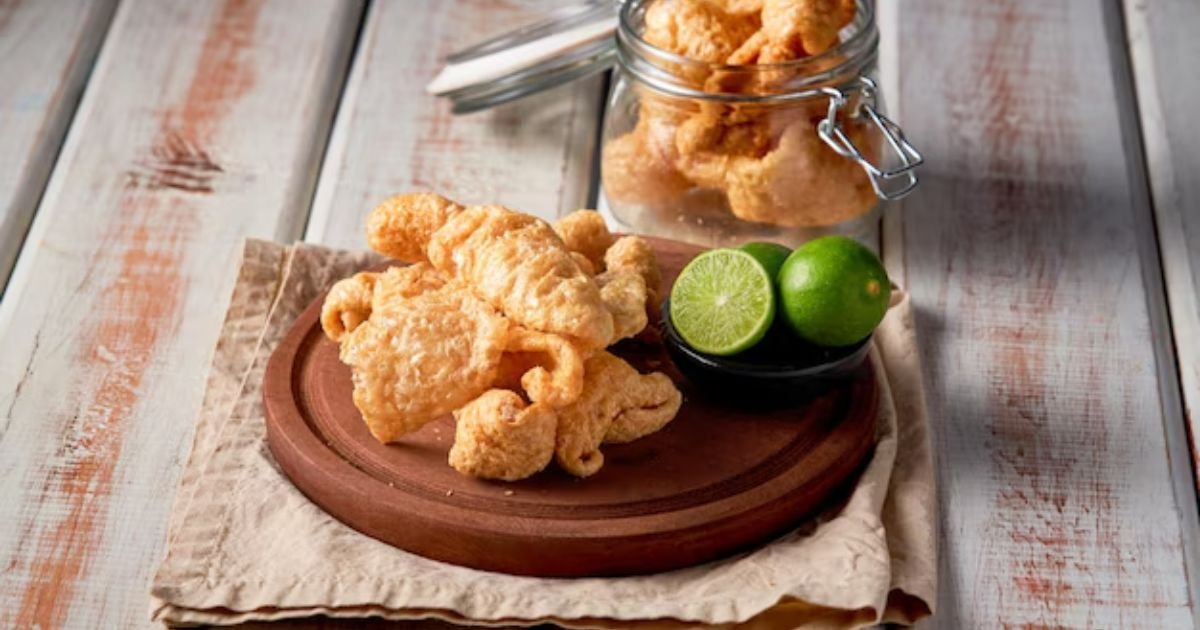
Chile lime brings acidity and heat, closer to how chicharrones are sold at Mexican street stalls, where fresh lime gets squeezed over the bag on the spot.
Adobo and garlic sit closer to Puerto Rican and Dominican traditions, with warmer, more savory seasonings.
Smoky barbecue is a crossover flavor, borrowing from American BBQ traditions and working well with chicharrones made from pork belly rather than skin-only styles.
Spicy vinegar shows up in Filipino-style chicharon, where the dipping sauce matters as much as the snack itself.
Trying a few profiles side by side is the easiest way to figure out which style actually suits your taste, rather than guessing from a label.
The Nutrition Angle
Part of the reason chicharrones have come back into the conversation is their macro profile. USDA FoodData Central lists fried pork rinds at roughly 17 grams of protein and close to zero carbs per ounce, which fits cleanly into keto, paleo, and low-carb eating patterns.
That protein is largely collagen. Cleveland Clinic describes collagen as the most abundant protein in the body, providing structure for skin, tendons, joints, and connective tissue. Dietary collagen has been studied for potential support of skin, joint, and bone health, though the research is still developing. Collagen is also considered an incomplete protein on its own, so pairing chicharrones with a complete protein source rounds out the amino acid profile.
Saturated fat is worth noting. Chicharrones aren’t a low-fat snack, and portion size matters. Premium versions often contain slightly higher-quality fat because of the rendering method, but the basic rule still applies.
How to Serve Premium Chicharrones
Straight from the bag works. So do several other options that suit the premium category specifically.
On a charcuterie board, premium chicharrones sit well alongside cured meats, hard cheeses, olives, and fig jam. The salty, fatty crunch works as a counterpoint to soft cheeses and cured pork.
Crushed, they make a strong low-carb breadcrumb alternative for chicken, fish, or cauliflower. Some kitchens now sell them as “pork panko” for exactly this use.
As a topping, they add crunch and protein to soups, chili, tacos, grain bowls, and salads. A handful on a Caesar salad changes the dish entirely.
For travel and practical moments, they hold up well. A bag fits in a carry-on, doesn’t need refrigeration, and works as a protein-forward option when a fridge and a stove aren’t around.
Frequently Asked Questions
1. What makes a chicharrón “premium”?
Premium chicharrones typically use pork from smaller farms, carry short ingredient lists, skip artificial flavors and MSG, and use traditional preparation methods like rendering in pork fat rather than industrial oils.
2. Are premium chicharrones healthier than standard versions?
They tend to have cleaner ingredient lists and fewer additives, which some people prefer. Macro-wise, the basic nutritional profile is similar. Both are high-protein, low-carb snacks with meaningful saturated fat content.
3. How should premium chicharrones be stored?
Unopened bags are shelf-stable and don’t need refrigeration. Once open, keep the bag sealed and dry. Humidity softens the texture faster than anything else.
4. Are chicharrones keto-friendly?
Skin-based chicharrones contain close to zero carbohydrates, which fits keto and low-carb macros cleanly. Flavored varieties sometimes add small amounts of sugar or starch to seasonings, so checking the label matters.
5. What’s the difference between chicharrones and pork rinds?
In the United States, the terms are often used interchangeably. In Latin American traditions, chicharrones sometimes include pork belly or other cuts, while pork rinds usually refer to pork skin only.
6. Can chicharrones be part of a balanced diet?
For people who eat meat and are mindful of portion size and sodium, premium chicharrones can fit into a balanced eating pattern, particularly when paired with fiber-rich foods, vegetables, and complete protein sources.
Conclusion
Chicharrones have been around for centuries, but the premium category is newer, and it’s changing what the category looks like on American shelves. Smaller producers, cleaner ingredients, traditional preparation methods, and regional flavor profiles have lifted chicharrones out of the gas station aisle and into specialty retailers, charcuterie boards, and the broader craft snack conversation.
At their best, they’re the kind of snack that feels at home at a casual dinner gathering as much as a quick afternoon break.
The premium category isn’t always necessary for everyone. For someone who only wants a crunchy, salty snack, a standard bag works fine. For anyone paying attention to sourcing, ingredient lists, and how the snack actually tastes without heavy seasoning masking it, the difference is real and reasonably easy to find once you know what to look for.
Starting with one premium bag in a flavor that fits your taste is the simplest way in. From there, comparing it to a standard version side by side makes the difference obvious.