
Introduction
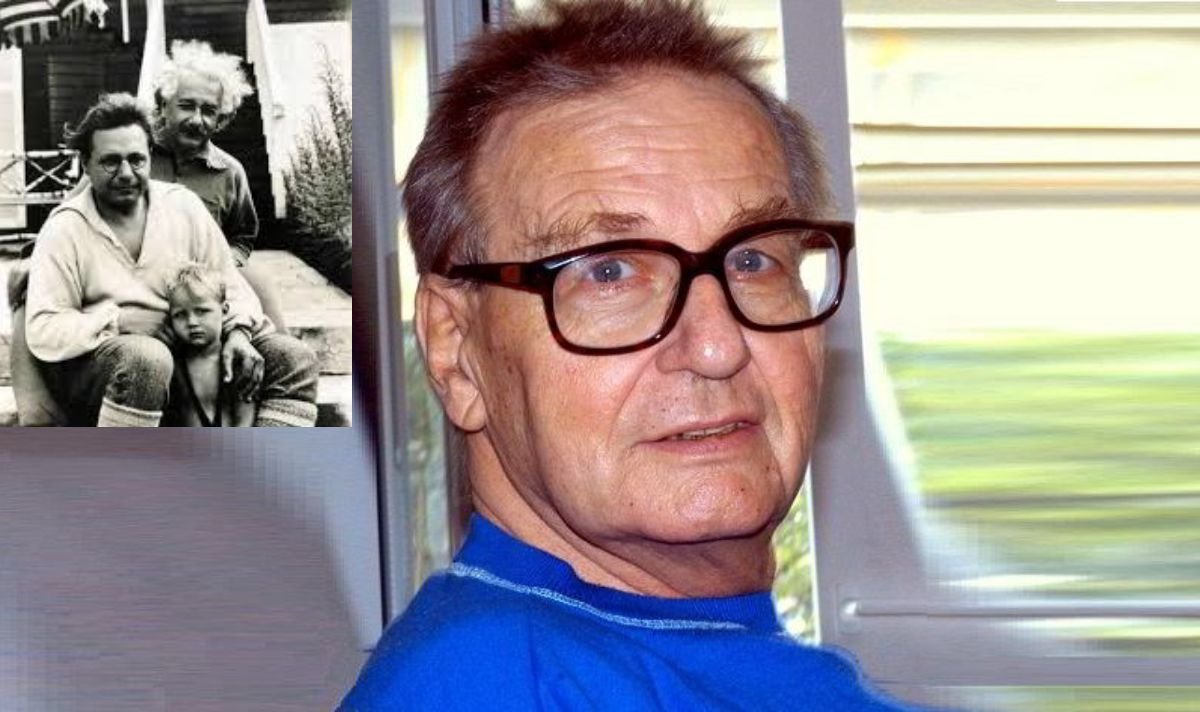
When people hear the name Einstein, one image instantly comes to mind: wild hair, deep eyes, and revolutionary ideas about space and time. But history did not stop with Albert Einstein. It continued through his children and grandchildren, including Bernhard Caesar Einstein, a man who carried one of the most famous surnames in the world yet chose a remarkably quiet and independent path.
Bernhard Caesar Einstein was not a theoretical physicist. He did not reshape modern science with groundbreaking equations. Instead, he built a professional life in engineering and technology, contributing through innovation rather than fame. His story is less dramatic, but in many ways, it is deeply human and inspiring.
Let’s take a detailed look at his life, family, career, and legacy.
Quick Bio
| Detail | Information |
|---|---|
| Full Name | Bernhard Caesar Einstein |
| Date of Birth | July 10, 1930 |
| Place of Birth | Dortmund, Germany |
| Nationality | German-American |
| Father | Hans Albert Einstein |
| Grandfather | Albert Einstein |
| Profession | Engineer |
| Industry | Electronics & Laser Technology |
| Known For | Patents and technical innovations |
| Spouse | Doris Aude Ascher |
| Children | Yes |
| Date of Death | 2008 |
Early Life of Bernhard Caesar Einstein
Bernhard Caesar Einstein was born on July 10, 1930, in Dortmund, Germany. He was the son of Hans Albert Einstein, a respected hydraulic engineer, and the grandson of Albert Einstein, the Nobel Prize–winning physicist whose theory of relativity changed science forever.
His birth came during a difficult time in Europe. Political instability and the rise of Nazi Germany forced many Jewish families to leave the country. The Einstein family had already begun relocating, and Bernhard eventually grew up in the United States.
Unlike the mythic image often associated with the Einstein name, his early life was shaped by migration, adjustment, and rebuilding. These experiences likely influenced his grounded and practical personality later in life.
Growing Up in the Einstein Household
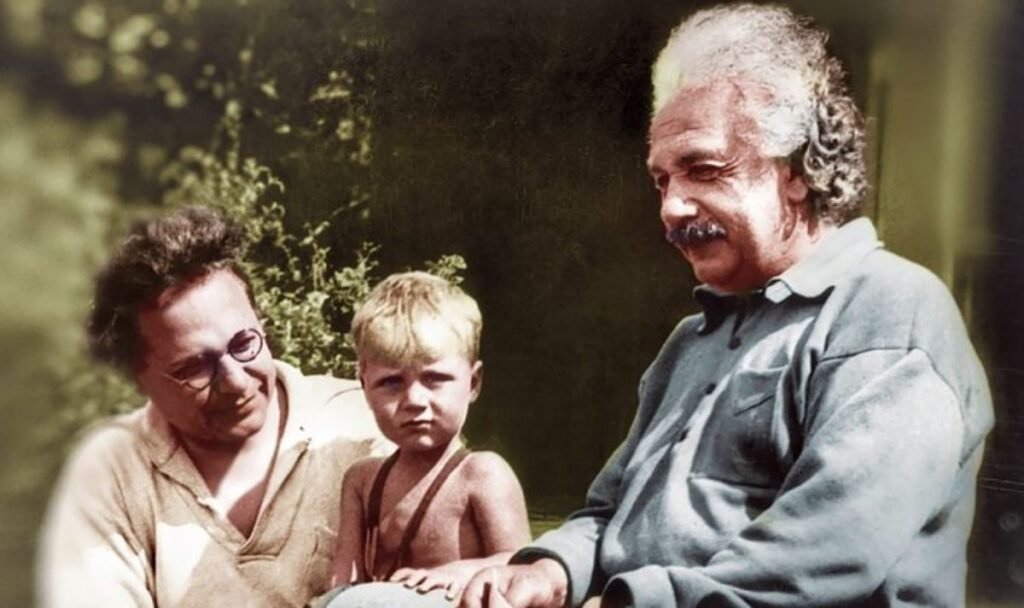
Imagine growing up knowing your grandfather is one of the most famous scientists on Earth. That was Bernhard’s reality.
Yet family accounts suggest that Albert Einstein was affectionate and warm with his grandchildren. To Bernhard, he was not just a global icon but a grandfather who shared time and conversations.
Still, the public reputation surrounding the Einstein name must have created expectations. It would have been easy to feel pressure to follow the same scientific path.
Instead, Bernhard Caesar Einstein gradually carved out his own direction.
Education and Career Direction
Rather than stepping into theoretical physics, Bernhard chose engineering. This decision may have been influenced by his father, Hans Albert Einstein, who was a respected engineer and professor at the University of California, Berkeley.
Engineering offered something different from abstract theory. It focused on solving real-world problems. It required precision, creativity, and persistence.
Bernhard pursued technical studies in the United States and later entered the professional world in applied science and electronics. His career path demonstrates that intellectual ability in the Einstein family expressed itself in different ways across generations.
Professional Career in Engineering and Technology
Bernhard Caesar Einstein worked in electronics and laser technology during a time when these fields were rapidly evolving. He was associated with companies such as Texas Instruments, among others in the technology sector.
His work included contributions to laser systems and light amplification technologies. Over the course of his career, he secured several patents.
This is significant.
Patents represent original solutions to technical problems. They show independent innovation. While he did not publish world-changing scientific papers like his grandfather, he helped advance practical technologies that support modern industries.
His professional life unfolded during decades when electronics were transforming communication, defense systems, and industrial design. Bernhard played his part in that transformation.
Read More: Ryan Reynolds: The Complete Biography of Hollywood’s Witty Superstar and Business Mogul
Bernhard Caesar Einstein and the Weight of Legacy
Carrying a name like Einstein comes with unique challenges. Expectations follow you everywhere. Comparisons become automatic.
However, Bernhard Caesar Einstein never appeared to chase attention or try to compete with Albert Einstein’s legendary status. Instead, he built a steady, meaningful career.
There is strength in that choice.
Rather than seeking fame, he focused on competence. Rather than stepping into public intellectual debates, he concentrated on engineering solutions.
His life shows that legacy does not require imitation. It allows room for individuality.
Personal Life and Family
Bernhard married Doris Aude Ascher, and together they had children. Through them, the Einstein lineage continued into new generations.
Unlike the highly documented personal life of Albert Einstein, Bernhard maintained privacy. He did not publish memoirs or seek interviews about being part of the Einstein family.
His focus appears to have been stability, work, and family life.
This balance reflects a grounded personality — someone who understood the weight of history but chose normalcy over celebrity.

Relationship with Albert Einstein
Bernhard was 25 years old when Albert Einstein passed away in 1955. That means he had meaningful years of interaction with his grandfather.
While there is limited public documentation about their private relationship, it is reasonable to assume that growing up in such an intellectually stimulating environment shaped his worldview.
However, there is no evidence that Albert directly pushed him into a specific career path. Bernhard’s engineering focus suggests independence rather than pressure.
The relationship likely offered inspiration without obligation.
The Evolution of the Einstein Legacy
When people search for Bernhard Caesar Einstein, they often wonder whether scientific genius runs in the family.
The truth is more nuanced.
Albert Einstein transformed theoretical physics. Hans Albert Einstein became a respected engineer. Bernhard continued in engineering and technical innovation.
The family tradition was not limited to physics. It was rooted in analytical thinking, curiosity, and problem-solving.
In this way, the Einstein legacy evolved rather than repeated itself.
Later Years and Death
Bernhard Caesar Einstein passed away in 2008 at the age of 78.
He lived through extraordinary technological change, from early electronics to the rise of digital systems and modern computing. His lifetime spanned decades of innovation that reshaped the world.
Yet he remained largely outside public attention.
His story is not one of dramatic headlines. It is one of steady contribution.
Why Bernhard Caesar Einstein Still Matters
History often highlights extraordinary individuals. But it also benefits from understanding the generations that follow.
Bernhard Caesar Einstein represents continuity without imitation. He honored his family’s intellectual heritage while choosing a distinct professional identity.
His life reminds us that greatness does not always look revolutionary. Sometimes it looks like dedication, innovation, and quiet professionalism.
That perspective adds depth to the broader Einstein story.
Conclusion
The story of Bernhard Caesar Einstein is not about rewriting scientific laws. It is about building a meaningful life under extraordinary circumstances.
Born into one of the most famous intellectual families in history, he chose engineering, innovation, and privacy over global recognition. He earned patents, supported technological advancement, and raised a family while quietly carrying the Einstein name.
His journey teaches an important lesson: legacy does not demand repetition. It allows evolution.
And in that quiet evolution, Bernhard Caesar Einstein found his own place in history.
Frequently Asked Questions
Was Bernhard Caesar Einstein a physicist?
No. He worked in engineering and applied technology rather than theoretical physics.
What did he contribute professionally?
He contributed to electronics and laser-related technologies and held several patents.
How is he related to Albert Einstein?
He was Albert Einstein’s grandson.
Did he seek fame?
No. He lived a mostly private life focused on professional and family commitments.
When did he die?
He passed away in 2008.