

Introduction
If you’ve ever stared at eight unfinished word grids with one guess left, you already understand the thrill—and panic—of octordle rescue. Unlike standard word puzzles, Octordle demands that you solve eight five-letter words simultaneously, turning each guess into a high-stakes decision. When things start slipping out of control, mastering octordle rescue strategies becomes the difference between total failure and a last-minute comeback.
This comprehensive guide breaks down everything you need to know about octordle rescue techniques, from early-game optimization to late-game recovery tactics. Whether you’re a daily player chasing streaks or a competitive word-game enthusiast, you’ll learn how to analyze board states, manage letter distribution, and execute high-efficiency rescue moves with confidence.
What Is Octordle and Why Is Octordle Rescue So Important?
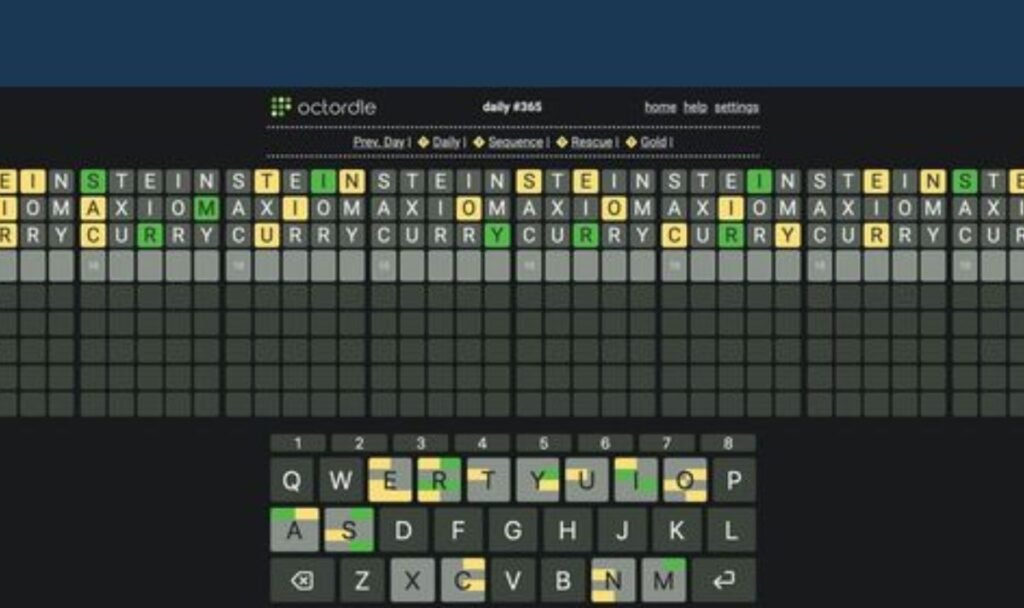
Octordle is an advanced word puzzle inspired by Wordle, but instead of solving a single word, players must solve eight words at the same time within 13 guesses. Every guess applies to all boards simultaneously, creating complex letter feedback loops across multiple grids.
This is where octordle rescue comes into play. A rescue situation happens when:
- Several boards remain unsolved after 8–10 guesses
- You have overlapping letter patterns
- You’re down to 2–3 guesses with multiple incomplete words
At this stage, random guessing is fatal. Strategic letter coverage and pattern recognition become essential.
How Octordle Rescue Differs from Standard Wordle Strategy
In Wordle, you optimize one board. In Octordle, you must balance eight parallel feedback systems. A rescue scenario is rarely about one word—it’s about managing letter distribution across multiple grids.
Key differences include:
- Shared guesses across all boards
- Higher probability of repeated letters
- Increased risk of conflicting letter placements
- Greater reliance on elimination strategy
Octordle rescue strategy is less about guessing the obvious and more about maximizing information gain per move.
Early-Game Decisions That Prevent Rescue Situations
The best octordle rescue strategy starts before the rescue is needed. Strong opening moves dramatically reduce late-game pressure.
Use opening words that:
- Contain high-frequency consonants like R, S, T, L, N
- Include common vowels like A, E, O
- Avoid duplicate letters early on
Many experienced players use three structured starter words to reveal 15 unique letters. By guess four, you should already have strong anchors on multiple boards, reducing the likelihood of a chaotic octordle rescue later.
Recognizing a True Octordle Rescue Moment
Not every tough board demands panic. A true octordle rescue situation typically includes:
- More than three unsolved boards after guess nine
- Two guesses remaining
- Overlapping letter pools
- Multiple yellow letters without placement clarity
The key is emotional control. Octordle rescue success depends on logical evaluation, not desperation guessing.
Pause and assess:
- Which boards are closest to completion?
- Which letters remain untested?
- Where do letter conflicts exist?
The “Information Over Accuracy” Rescue Principle
In late-game octordle rescue scenarios, players often make the mistake of targeting one word at a time. That approach wastes precious guesses.
Instead, apply the information over accuracy principle:
- Choose words that test new letters across multiple boards.
- Prioritize uncovering placement clarity.
- Avoid locking into a single solution prematurely.
Even if a guess does not solve a board, revealing two new correct placements across three boards can shift the entire game in your favor.
Advanced Letter Distribution Techniques
Successful octordle rescue strategy depends heavily on letter probability awareness. English five-letter words commonly feature certain structural patterns:
- Consonant–Vowel–Consonant–Vowel–Consonant
- Ending patterns like -ER, -ED, -ES, -LY
- Frequent consonant clusters like TH, CH, SH, TR
When in rescue mode, examine unsolved boards for structural similarities. Often, two boards share identical endings or similar consonant placements. Recognizing these overlaps allows you to design one guess that advances multiple boards simultaneously.
Managing Duplicate Letters During Octordle Rescue
Duplicate letters create one of the biggest traps in octordle rescue situations. Players often underestimate their frequency.
Common duplicate scenarios include:
- Double vowels such as EER, OON
- Double consonants like LL, TT, SS
If a board shows one confirmed letter but refuses common placements, consider the possibility of duplication. Ignoring this possibility can waste final guesses.
A calculated duplicate-letter test can solve multiple boards instantly.
The Board Prioritization Method
Not all boards deserve equal attention during octordle rescue.
Use a prioritization framework:
- Solve boards with 4 confirmed letters first
- Delay boards with high ambiguity
- Avoid guessing rare-letter-heavy boards too early
Finishing near-complete boards reduces cognitive load. Each solved grid removes mental clutter, allowing clearer thinking for complex rescue boards.
Pattern Recognition in High-Pressure Moments
One of the most underrated octordle rescue skills is rapid pattern recognition.
Train yourself to identify:
- Common endings like -IGHT, -OUND, -AINT
- Shared vowel placements across boards
- Letter elimination chains
For example, if three boards show a final letter “E” and you’ve ruled out R, D, and S endings, that dramatically narrows options.
Pattern fluency increases rescue success rates significantly.
Guess Economy: Maximizing Each Remaining Move
When only two guesses remain, octordle rescue becomes a math problem.
Ask yourself:
- Can this guess realistically solve more than one board?
- Does this word introduce untested letters?
- Am I sacrificing too much coverage for a single solve?
The final guesses should aim for maximum cross-board impact, not perfection on one grid.
Read More: Atlantic Firearms: Complete Guide to Products, Pricing, Legitimacy & Buying Experience
Common Octordle Rescue Mistakes
Even experienced players fall into predictable traps during rescue scenarios.
Overcommitting to One Board
Focusing exclusively on one word while ignoring others often leads to multi-board failure.
Ignoring Letter Elimination
Failing to track eliminated letters results in wasted guesses.
Panicking and Guessing Random Words
Emotional decisions rarely work in Octordle.
Avoiding Risky but Informative Guesses
Sometimes a broad testing word is more powerful than a narrow solve attempt.
Avoiding these mistakes improves overall rescue consistency.
Building a Consistent Octordle Rescue System
Consistency beats intuition in Octordle. Develop a repeatable process:
- Evaluate letter coverage
- Identify overlapping patterns
- Test missing vowels
- Solve highest-confidence boards first
- Reserve final guess for narrow elimination
This systematic approach transforms octordle rescue from chaotic scrambling into calculated decision-making.
Daily Practice and Skill Development
Improving octordle rescue performance requires repetition and review.
After each puzzle:
- Analyze failed rescue attempts
- Identify missed pattern cues
- Track frequent letter mistakes
- Note which starter words performed best
High-level players treat Octordle as a training exercise in probability and linguistic structure.
Psychological Control in Late-Game Rescue
Rescue scenarios trigger pressure. Heart rate rises. Mistakes increase.
The best Octordle players stay calm and:
- Slow down between guesses
- Re-check all boards before submitting
- Verify letter conflicts
- Count remaining viable solutions
Mental discipline often determines rescue outcomes more than vocabulary knowledge.
Why Octordle Rescue Feels So Rewarding
There’s a unique satisfaction in saving a collapsing Octordle board. Successfully executing an octordle rescue requires:
- Strategic foresight
- Pattern fluency
- Efficient guess economy
- Calm under pressure
Unlike easier word games, Octordle rewards analytical thinking across multiple data streams simultaneously. The rescue moment transforms frustration into triumph.
Conclusion: Mastering Octordle Rescue for Consistent Wins
Mastering octordle rescue is not about luck. It’s about structured thinking, disciplined letter analysis, and maximizing information per guess. When boards begin to spiral out of control, a calm evaluation of letter distribution, pattern overlap, and guess economy can completely reverse the outcome.
By practicing early-game optimization, understanding duplicate-letter behavior, and applying board prioritization, you dramatically reduce late-game chaos. And when rescue situations do occur, applying a systematic approach ensures you convert near-losses into satisfying victories.
With consistent application of these strategies, octordle rescue becomes less of a panic moment and more of an opportunity to demonstrate skill.
Frequently Asked Questions (FAQs)
What is Octordle rescue?
Octordle rescue refers to advanced strategies used to recover and solve multiple unsolved boards late in an Octordle puzzle when guesses are limited.
How many guesses do you get in Octordle?
Players typically receive 13 guesses to solve eight five-letter words simultaneously.
What is the best starting strategy to avoid rescue situations?
Use three high-frequency letter starter words to maximize early letter discovery and reduce ambiguity.
How do you handle duplicate letters during Octordle rescue?
Consider duplication when standard placements fail and test double-letter structures strategically.
Should you focus on one board at a time?
No. Successful octordle rescue requires cross-board letter efficiency and multi-board pattern evaluation.
Is Octordle harder than Wordle?
Yes. Solving eight boards simultaneously dramatically increases complexity and strategic depth.