
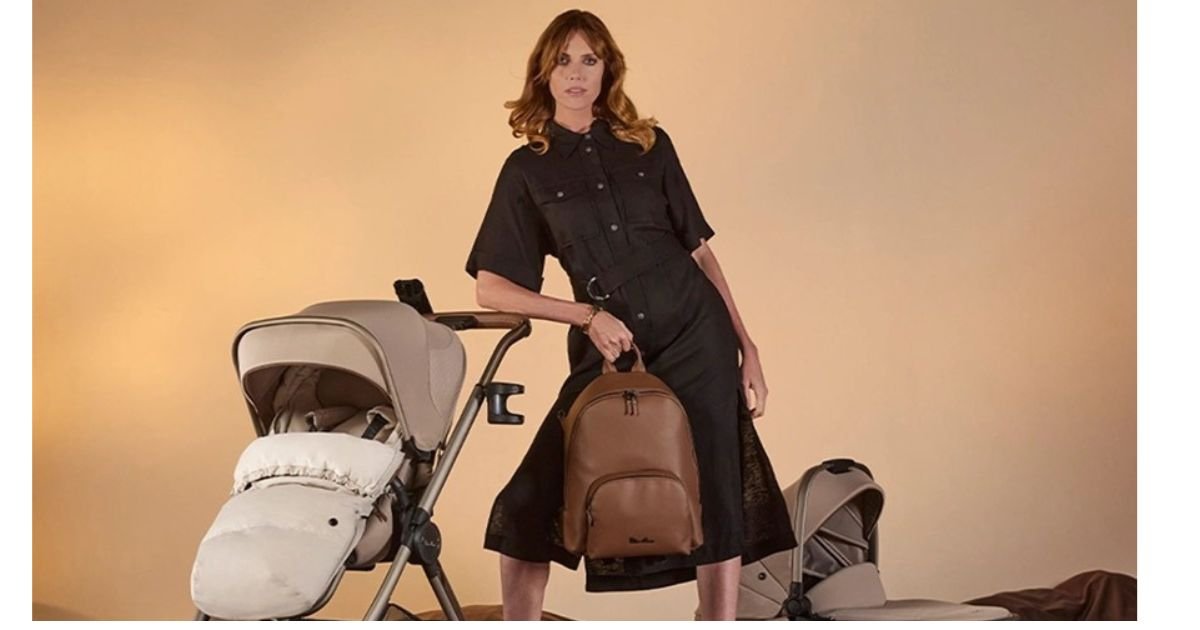
Choosing a baby stroller is one of the most important — and most personal — purchases you’ll make as a new parent. With hundreds of models on the market and a dizzying range of features, prices, and brand promises, it can be hard to know where to begin. This guide cuts through the noise and helps you focus on what actually matters, so you can make a confident, informed decision for your family.
Why Your Choice of Stroller Matters More Than You Think
A stroller is not just a pram — it’s your daily companion for the first several years of your child’s life. You’ll fold it one-handed while holding a wriggling baby , navigate cobblestones and supermarket aisles, and load it in and out of a car boot dozens of times a week. A stroller that looks beautiful in a showroom but is awkward to fold or heavy to lift will quickly become a source of daily frustration.
The good news is that the premium stroller market has never been better. Brands like Silver Cross, BabyZen, Nuna, and Joolz have spent years engineering products that combine elegant design with genuine ergonomic functionality. When you invest in quality, you feel the difference on day one — and every day after.
The Three Main Types of Baby Strollers
Before comparing individual models, it helps to understand the three core categories available to parents today.
1. Travel Systems (3-in-1 and 2-in-1)
Travel systems are the most versatile option for newborns and are designed to grow with your child. A 3-in-1 system typically includes a carrycot for newborns (lying flat is essential in the early months), a toddler seat unit, and a car seat adapter — all sharing a single chassis. This means you buy once and use across multiple stages.
These systems are ideal if you want a single investment that covers you from birth through toddlerhood. Premium models are well-engineered, and the transition between configurations is typically smooth and intuitive.
2. Sport and Everyday Pushchairs
Sport strollers are built for active families. They feature larger wheels, improved suspension systems, and sturdy frames that handle varied terrain — from forest paths to city kerbs — without compromising comfort. If you walk regularly, jog, or spend a lot of time outdoors, a sport pushchair will reward you with better handling and a smoother ride for your child.
3. Compact and Umbrella Strollers
Compact strollers — sometimes called umbrella strollers — are lightweight, fast-folding, and designed for parents who travel frequently or use public transport regularly. The BabyZen YOYO, for example, is cabin-approved for most airlines and folds to a remarkably small size without sacrificing quality or comfort.
The trade-off with compact models is that they are better suited for older babies who have head and neck control, rather than newborns who need full lie-flat support.
5 Key Things to Look For When Buying a Stroller
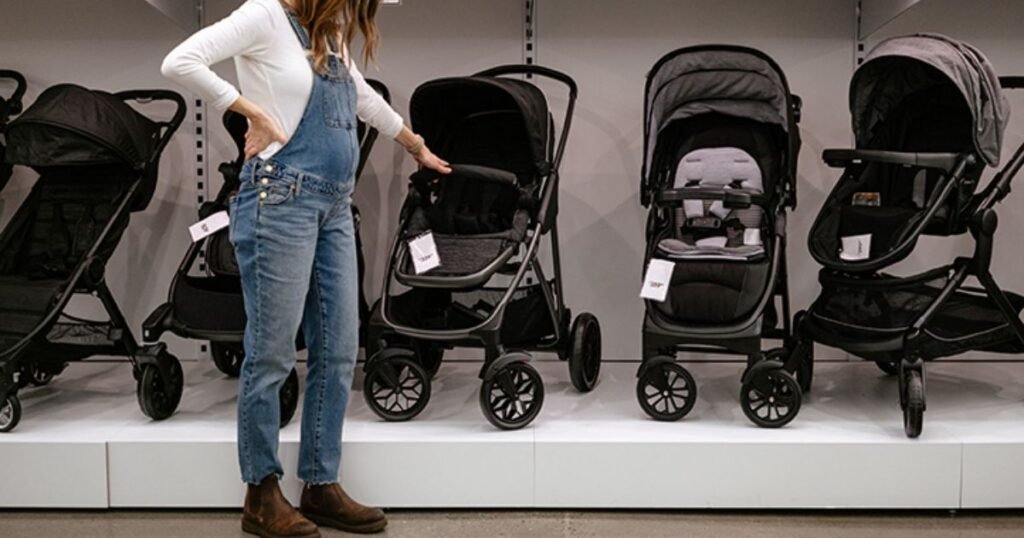
• Fold mechanism and size. You will fold and unfold this stroller every single day. Try it in the shop with one hand. Does it lock securely? Does it fit in your car boot?
• Suspension and wheel quality. Good suspension is not a luxury — it directly impacts how smoothly your baby travels and how much vibration reaches them. Test the pushchair on an uneven surface if possible.
• Seat recline and lie-flat capability. For newborns, a fully flat position is strongly recommended by paediatric guidelines. Ensure the model you choose supports this from birth, or that a compatible carrycot is available.
• Harness safety and ease of use. A five-point harness is the standard in quality strollers. Check how easily you can buckle and adjust it — you’ll be doing this many times a day.
• Handlebar height. An ergonomically placed handlebar prevents back strain. Adjustable handlebars are ideal for households where two adults of different heights will share pushing duties.
New vs. Second-Hand: What’s Worth Knowing
There is a strong case for buying a new stroller from a reputable retailer, particularly for the chassis and car seat components. Safety standards are updated periodically, and knowing the full history of a product — that it has never been in an accident and has not been modified — gives genuine peace of mind.
That said, accessories such as rain covers, footmuffs, and parasols can often be sourced second-hand in excellent condition and represent a smart saving without any meaningful compromise.
What New Parents Often Overlook
Beyond the core features, a few practical details regularly catch new parents off guard:
• Storage basket size. If you shop on foot or take the stroller to the market, a generous underseat basket is genuinely useful day to day.
• Canopy UPF rating. Sun protection for your baby’s skin is worth checking, especially for summer use.
• Washable fabrics. Babies are messy. A seat pad or canopy that can go in the washing machine is a genuine quality-of-life upgrade.
• Compatibility with car seat brands. If you plan to build a travel system, confirm in advance which car seats are officially compatible with the chassis you’re considering.
Final Thoughts
The right baby stroller for your family is the one that fits your lifestyle, your home, and your daily routines — not the one with the most features or the highest price tag. Take time to try different models in person, ask questions, and think practically about how and where you’ll use it every day.AtChoconillas, the full range of premium strollers — from compact travel companions to full travel systems — is available to explore in detail, with expert guidance to help you find exactly what suits your family. Quality matters. Your daily comfort matters. And most of all, your baby’s safety and comfort matter.